Thanksgiving sides tend to run on autopilot: the same green bean dish, the same roasted roots, the same everything-is-soft-and-beige lineup. You can break that pattern without adding hours to your cooking day. The trick is starting with better, fresher vegetables and then doing less to them.
That's the spirit of a recent appearance by Farmer Lee Jones of The Chef's Garden on "Fox & Friends Weekend," where, per Fox News, he showcased fresh fall vegetables and Thanksgiving side dishes as a way to bring brighter, fresher flavors to the holiday table. The segment's reported message is simple: seasonal produce can upgrade classic sides without overcomplicating the meal.
The coverage doesn't spell out a full recipe list, so what follows is my own practical playbook in that same spirit, not a recap of what Jones cooked.
Start with the vegetable, not the recipe
The biggest upgrade available to you costs nothing in technique: buy vegetables at their seasonal peak and shop as close to the farm as you can. A farmers market, a farm stand, or a CSA pickup will usually beat a bag that's traveled for a week.
Three quick checks at the stand:
- Firmness. Squash, carrots, and turnips should feel heavy for their size, not rubbery.
- Fresh tops. If greens are still attached to beets, radishes, or carrots, they should look perky. Bonus: they're edible.
- Smell. Brassicas like Brussels sprouts and cauliflower should smell clean and mild, not sulfurous.
Great produce needs less help. That's the whole farm-to-table premise, and it's also the most forgiving way to cook for a crowd.
Upgrade the classics in small, specific ways
You don't need to replace your family's favorites. Nudge them.
Roasted vegetables: higher heat, better finish
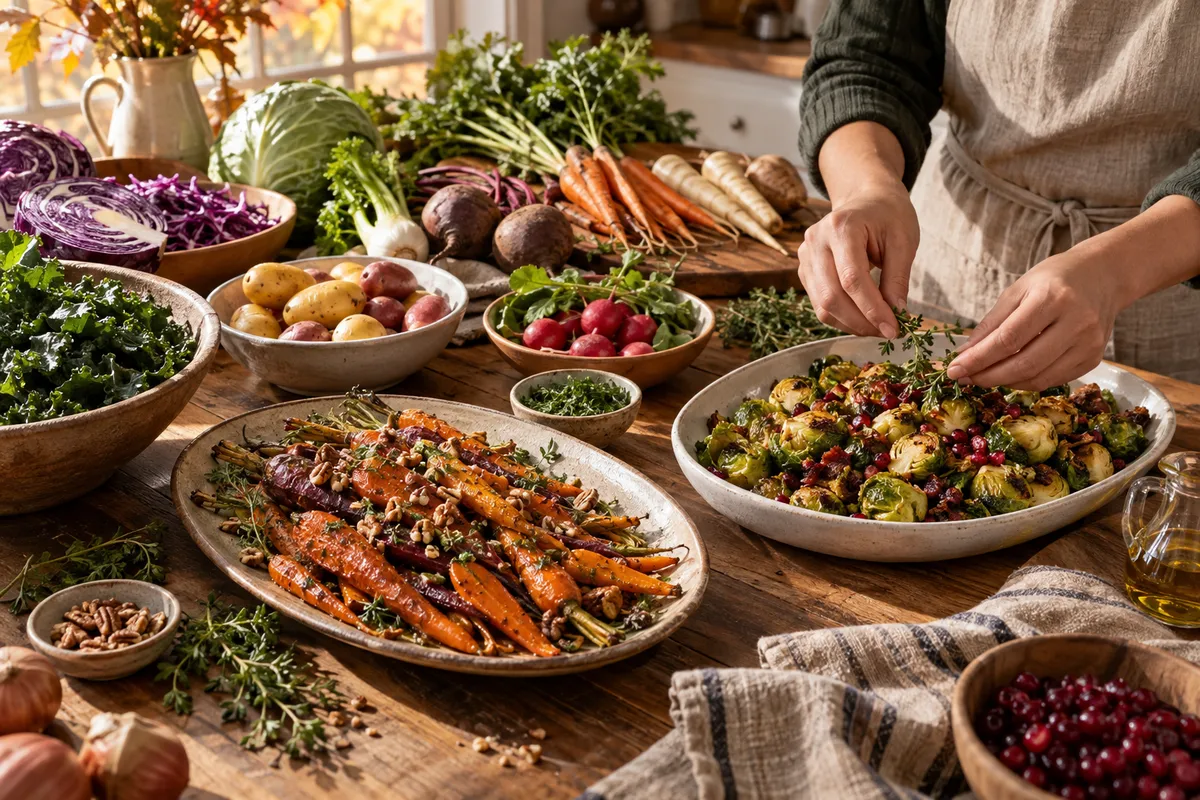
Roast at 425°F on a sheet pan with space between pieces. Crowded vegetables steam instead of browning. Pull them out when the edges are deeply caramelized, then finish with something bright: a squeeze of lemon, a splash of good vinegar, or a handful of chopped herbs. Acid at the end is what makes roasted vegetables taste fresh instead of heavy next to turkey and gravy.
Green vegetables: cook them last and fast
Green beans, Brussels sprouts, or leafy greens lose color and character when they sit. Blanch green beans a day ahead, shock them in ice water, and refrigerate. On Thursday, a couple of minutes in a hot skillet with butter or olive oil is all they need. Shave raw Brussels sprouts into a salad and you've added a crisp, cool dish to a table full of soft, warm ones.
Mashed and creamy sides: add something fresh on top
Mashed potatoes or squash puree can stay exactly as they are. What changes the dish is the last step: toasted nuts or seeds, a spoonful of herb oil, or a scatter of tender microgreens or fresh herbs for contrast. Texture and a green note do more than extra butter.
Plate like a chef, in about two minutes
Presentation is the cheapest upgrade on the table. A few habits that work for home cooks:
- Use a warm, shallow platter, not a deep bowl. Vegetables look better spread out than piled.
- Vary the cuts. Halve some carrots lengthwise, leave a few whole with an inch of stem, slice others on the bias. Mixed shapes look intentional.
- Finish in layers. Seasoning goes on during cooking; flaky salt, herbs, citrus zest, or a drizzle of oil goes on right before serving.
- Add one contrasting color. A deep-orange roasted dish gets a green herb. A pale puree gets something dark or bright on top.
None of this takes more than a couple of minutes, and it's the kind of detail guests notice even if they can't say why.
Build the menu around contrast
A Thanksgiving plate is rich by default: turkey, stuffing, gravy, potatoes. The sides that stand out tend to push in the opposite direction. When you plan, aim for a balance:
- One rich side (the creamy, buttery one everyone expects)
- One roasted, caramelized side (for sweetness and depth)
- One crisp or bright side (raw, lightly dressed, or quickly sautéed)
That three-part structure keeps the meal from feeling one-note and gives vegetable-loving guests something to be excited about. It also helps you spread the workload: the bright dish is usually the fastest, and the rich one can often be made ahead.
Make-ahead moves that protect your sanity
Seasonal vegetables are friendly to advance prep:
- Wash, trim, and cut hard vegetables like squash, carrots, and parsnips up to two days ahead. Store them in airtight containers in the fridge.
- Make dressings, vinaigrettes, and herb oils the day before. They taste better after resting.
- Blanch green vegetables ahead, as noted above, then finish them in a pan right before serving.
- Keep delicate garnishes separate until the last minute so they stay crisp and bright.
By Thursday, your job is mostly roasting, reheating, and finishing.
The takeaway
You don't need a new menu to cook a more memorable Thanksgiving. Buy the freshest fall vegetables you can find, cook them simply at high heat, and finish each one with something bright. Pick one side this year, give it that treatment, and let the produce carry the dish.